Investor
Free Account
News
Ghana inflation edges up to 5.5% in October
Ghana’s headline inflation rose for a third consecutive time to 5.5 per cent in October 2026, up from 5.2 per cent in September, driven by transport and services cost, the Ghana Statistical Service (GSS) announced on Wednesday.
Nonetheless, the 5.5 October 2026 inflation figure remains 2.5 percentage points below the eight per cent recorded in October last year, GSS noted in the latest Consumer Price Index (CPI) and Inflation report.
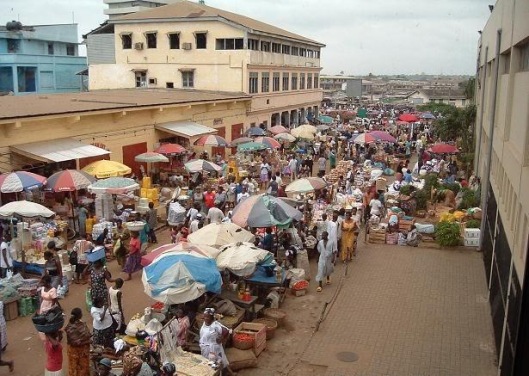
The report, which observed 307 Items in the inflation basket, from 8,337 Outlets, covering 57 Markets and 13 Divisions of spending across the country noted a basket that cost GH¢100 in October 2025 now costs GH¢105.50, a GH¢5.50 rise, or an inflation of 5.5 per cent.
Despite the year-on-year rise, prices declined on a month-on-month basis, with the overall price level reducing by 0.1 per cent between September and October, compared with a 1.1 per cent increase in the previous month.
Dr Alhassan Iddrisu, Government Statistician, presenting the CPI and Inflation report in Accra, said, “inflation slowed from eight per cent to 5.5 per cent in a year, but has risen for three consecutive months since July (4.6 per cent).”
The GSS attributed the monthly decline largely to food, which fell by two per cent in October after rising by 1.5 per cent in September, offering some relief to households whose budgets were dominated by food spending.
Food inflation eased sharply to 2.8 per cent year-on-year, down from four per cent in September and 9.5 per cent a year ago, driven by steep falls in staples such as guinea corn/sorghum, down 28.0 per cent, maize, down 27.2 per cent, and local rice, down 14.3 per cent.
In contrast, non-food inflation climbed to 7.9 per cent from 6.2 per cent in September, and accounted for about 75.7 per cent of total inflation, meaning that for every GHS1 of price increase, about 76 pesewas came from non-food items.
Goods inflation declined to 3.8 per cent from the 4.2 per cent in September, while Services emerged as the fastest-rising category, with inflation jumping to 11.5 per cent from 8.3 per cent in September, nearly three times the 3.8 per cent recorded for goods.
Across the 13 divisions, Transport was the single biggest pressure point, recording the highest divisional inflation rate at 14.1 per cent, up by 8.4 percentage points in just one month, following an eight per cent rise in transport prices in October alone.
Housing, water and energy also remained a major driver, with inflation of 10.5 per cent and a 24.4 per cent share of overall inflation, almost equal to food’s 24.3 per cent share.
At the item level, the contrasts were even sharper, with fresh tomatoes soaring by 119.3 per cent year-on-year, ginger by 88.2 per cent and shrimps by 88.8 per cent, even as other items became significantly cheaper.
Locally produced items continued to dominate price movements, rising by 6.9 per cent and accounting for 86.4 per cent of inflation, while imported items rose by a much slower 2.4 per cent, unchanged from September.
At the regional level, inflation ranged from 9.7 per cent in Ashanti to a negative 0.5 per cent in Northern Region, where prices actually fell over the year, with Ashanti and Greater Accra together contributing 60.2 per cent of national inflation.
Dr Iddrisu said the figures show that Ghana’s inflation story was now “one national rate, many local experiences,” and urged households, businesses and government to use the official 5.5 per cent figure as a common basis for wage talks, contracts and planning.
He encouraged households to compare prices before purchase, businesses should use the official inflation rate for contracts and price review, while government used the regional and item data to target support where prices rise fastest.
Source: GNA
Comments (0)
No comments yet. Be the first to share your thoughts!